He-who-shall-not-be-named (hereafter “**”) is an awful person.
This should be obvious. And I guess it is. But it struck me when I got home yesterday and watched the 30 minutes or so of the oval office scrum between ** and Prime Minister Mark Carney.
It’s not that I’ve never seen ** before or heard his rambling nonsensical discourse. I just usually tune it out or turn it off after a few phrases spill out of his mouth. Yesterday’s encounter I wanted to see play out in its entirety without relying on media clips and analysis.
The best Canada, or I suppose any country, could get out of ** is perhaps some carving out of the edges of any agreement, some changes to the details. It’s not that ** is a tough negotiator or stuck in his point of view. It’s that he’s still running a shell game, the same shell game that he ran in business, except now he’s doing it with the presidency.
There’s also (in my view) some nutty thinking thrown in there too, the belief in misinformation, and a complete lack of moral grounding. In summary, ** is an amoral huckster with the power of the U.S. government — the entirety of the U.S. government, not just the executive branch, since ** doesn’t believe in checks and balances and so far his overstepping has gone largely, well, unchecked.
Ok. So, this is where we are. Let’s move on now and discuss the polar opposite of **: Mark Carney.
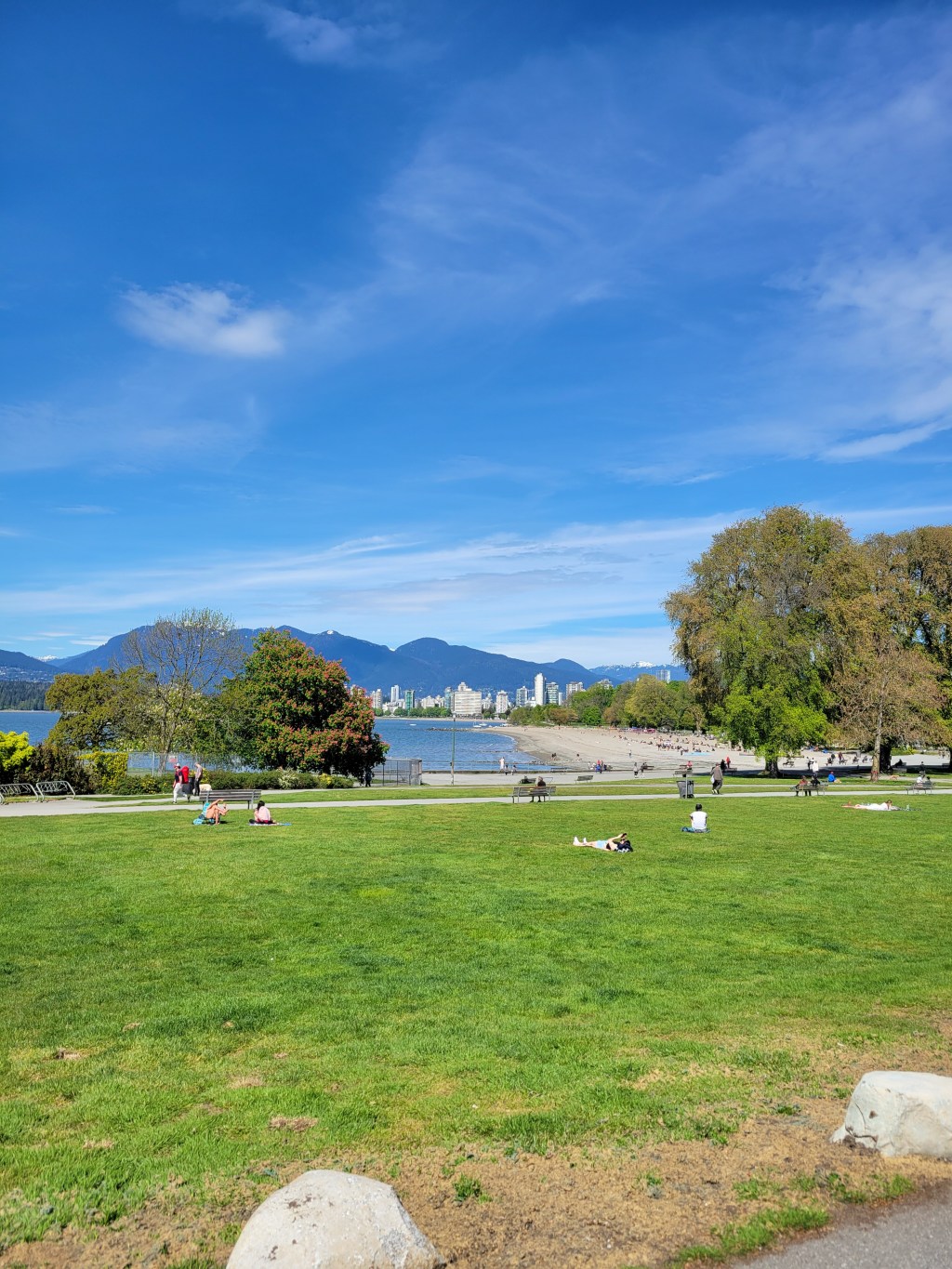
I went to the mountains last week to try to clear my head of the past several months. It was a no-electronics, no-media trip, which meant I spent most of my days looking at water and trees and lamenting the days when I could walk for hours without my right knee screaming in pain. I was armed with a journal and a source of reading material: Values, by Mark Carney.
Let’s be clear, I never thought I’d actually read Values. It was more a backup to staring off into space, especially when I was in public spaces. I thought I might at best skim a few passages before forever confining it to a shelf. I saw it as a throwaway read, suspecting it was written by a technocrat going through a midlife crisis in the middle of a global pandemic and searching for personal meaning.
In some ways, it reads like that. But in others, it so does not. I read Values — well, about half so far, since it’s taking a long time because I am actually reading it and not skipping huge sections — and wondered who this book was for. It’s part very dense economic philosphy and theory, part history lesson, part personal reflection on, well, values.
This isn’t some political biography a casual reader might pick up on the stacks at Costco (although, now that he’s Prime Minister, they might). It’s not quite Tree of Life in its scope, but there is a sense Carney is trying to connect a lot of ideas, from theory, philosophy, faith, and history, because he understands how they are all connected.
The key takeaway is that systems, financial systems in particular, are designed to do something. That something must have a purpose. When a system loses track of its purpose, it can collapse.
The Mark Carney on display in Values is one who has a deep understanding of rules, regulations, systems, and interconnectedness. He also gets how it can all be a house of cards if the moral basis is not sound. So this is someone who knows, as he writes, that rules rely on consent. Without consent, you’ve got chaos.
So I am certain Mark Carney, as does most of the world, sees ** for exactly who he is. The question is what does one do when the system starts to collapse. The question for Canada is how quickly, and how well, can we disentangle from our relationship with the U.S.
We can’t, completely. None of us are naive about that. It is kind of a dream to divorce from the U.S. entirely, so we can ignore ** and the damage that he has done and will continue to do. I would love to go back to thinking of the U.S. as a place where I go to vacation instead of a political territory run by a dictator who openly admits to wanting to put an economic bounty over our heads.
That’s not going to happen. Right now, ** is there. Our economy is deeply integrated with the U.S. It is the reality. But history unfolds in funny ways. There are a lot of moving parts and it’s the event that was in no one’s playbook that often makes the difference.
I honestly think we will be fine. Canada will be just fine.
It’s unclear after all where the systems will realign while and after ** takes a wrecking ball to established norms. But recent history might give us an indication. Last week Kirsten Hillman, Ambassador of Canada to the United States, shared a telling anecdote of Trans-Pacific Partnership (TPP) negotiations (starting at about 20:50 in the clip below). As she describes, there were 12 countries in the agreement, including the U.S., who insisted upon certain intellectual property rules. None of the other countries wanted those provisions, but they wanted the U.S. in the partnership, so they found a way to give the U.S. what they wanted.
After the U.S. failed to ratify the TPP and pulled out, the remaining 11 countries went on to sign a modified version of the agreement which is now in force. The new agreement does not include the IP provisions that had been pushed by the U.S. Which makes logical sense, since none of the other member countries had wanted them in the first place.
There is precedent for the rest of the world just going on without the U.S. There is also an opportunity to see what the world might look like without U.S. dominance, and it doesn’t have to be scary.
As for the meeting in the oval office, Mark Carney did just fine. If I had his ear I would say, you did just fine. There is strong political chatter that can make one feel off balance, uncertain in their steps. But politics is its own kind of system, that can’t lose touch with its underlying values. Remember the values, don’t get caught up in the chatter.
Back in 2012 George Stroumboulopoulos interviewed Carney, then Bank of Canada governor and chair of the Financial Stability Board — a global institution founded in the wake of the 2008 financial crisis to help prevent such a system collapse from happening again. Late in the interview (at about 7:40) there is this exchange:
Stroumboulopoulos: Is this about lessening our relationship with the United States economically?
Carney: It’s about enhancing our relationship with others.
The context is slightly different of course. The context in the interview was the cancer that caused the financial system to collapse not just in one country but several. But the concept remains.
It’s another day, and another meeting, and we’ll just keep going until those events no one had in their playbook start to occur.
 Mark Carney is Awesome